8 recommended rye whiskeys at a glance
These eight rye whiskeys cover the range, from inexpensive cocktail rye through the robust bottled-in-bond classic to aged premium rye. Prices are guide values for orientation, and the price on the day may differ.
Advertisement: links to Amazon are affiliate links. If you buy through them, we earn a commission. The price you pay does not change.

Bulleit 95 Rye
Bulleit 95 Rye carries its high rye content in its name: 95 percent rye in the mash bill makes it noticeably spicy and peppery. On the nose vanilla, oak and cinnamon, on the palate caramel, clove and honey, in the finish dry oak and robust rye spice. At approx. €21 and 45 percent it is the honest value-for-money winner and an ideal cocktail rye for an Old Fashioned or Manhattan.

Rittenhouse Bottled-in-Bond
Rittenhouse Bottled-in-Bond is regarded by many bartenders as the classic Manhattan rye. Bottled-in-bond here means: from a single distilling season, matured for at least four years and bottled at exactly 50 percent. On the nose vanilla, cocoa and liquorice, on the palate baking spices, toasted wood and toffee, in the finish clove, cinnamon and a dry heat. Robust enough to hold its own against sweetness and bitters in cocktails, and astonishingly inexpensive at that.

Woodford Reserve Rye
Woodford Reserve Rye is the more approachable of the rye classics, somewhat softer and rounder than a pure-bred high-rye. On the nose rye spice, black pepper and apple, on the palate clove, honey and a delicate mint, plus a long finish with sweet spice and butterscotch. A good choice if you want to drink rye neat without the heat getting out of hand.

Templeton 4
Templeton Rye 4 costs approx. €24 and is an inexpensive entry-level rye. Honestly speaking, it is a sourced whiskey: distilled at MGP in Indiana from a classic 95 percent rye mash bill, then bottled in Templeton, Iowa. The four years of maturation and the mild 40 percent make it more of an uncomplicated introduction and a solid mixing base than a great sipper.

WhistlePig 10
WhistlePig 10 is the flagship of one of the best-known American premium rye brands, from Vermont. It combines a 100 percent rye mash bill with ten years of cask maturation and a robust 100 American proof, that is 50 percent. At approx. €76 it plays clearly in the upper league and is aimed at anyone who wants to enjoy an aged, high-strength rye neat. For mixing it is almost too good.

Templeton 10
Templeton Rye 10 is the considerably more mature and stronger variant of the Iowa rye, also from MGP Indiana distillate with 95 percent rye. Ten years in the cask and a hefty 52 percent lift it to approx. €77 and make it a rye for special moments rather than for the cocktail shaker. If you know the inexpensive four-year-old and want more depth and power, you will find the upgraded version here.
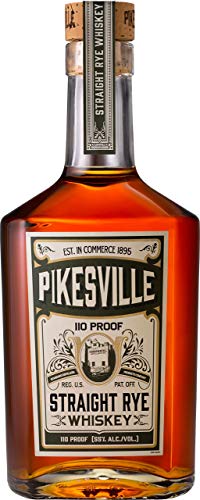
Pikesville 6
Pikesville is a six-year-old Kentucky rye from Heaven Hill, bottled at a robust 110 American proof, that is 55 percent. The brand goes back to a Maryland rye from 1895 and was named best rye in the world at the World Whiskies Awards in 2016. At approx. €115, however, it is expensive here and not easy to get, more of a connoisseur's and collector's piece than an everyday bottle.

WhistlePig 12
WhistlePig 12 Old World is the prestige bottling of the range, matured for twelve years and finished in European casks, which gives it the Old World suffix. At 43 percent it is bottled milder than the ten-year-old, while the long cask maturation comes more to the fore. At approx. €114 it is more something to give as a gift or for a special occasion than for every day.
What makes a rye whiskey
Rye whiskey is clearly regulated by law. In the USA it must consist of at least 51 percent rye and, like bourbon, mature in new, charred oak casks. This very high rye content gives rye its typical character: spicy, dry and peppery, with notes of clove, cinnamon and baking spices instead of the rich corn sweetness of a bourbon.
A straight rye must additionally mature for at least two years and may not contain additives, and the colour arises in the cask alone. Many classics get by without a fixed age statement, because beyond these two years there is no prescribed minimum maturation period for plain rye. The higher the rye content, the more robust and sharper the spice: a pure high-rye such as Bulleit 95 Rye with 95 percent rye tastes clearly more peppery than a rye with a high corn content.
Historically, rye was the first major whiskey style in North America, above all on the East Coast around Pennsylvania and Maryland. After Prohibition, the sweeter bourbon displaced rye almost completely, and only the cocktail renaissance of recent years has brought it back. You will find further American types in our bourbon and rye category.
Rye, bourbon and high-rye compared
Around American whiskey there circulate a few terms that are easily mixed up. The most important difference lies in the main grain and in a few production details that noticeably change the flavour.
While bourbon consists of at least 51 percent corn and tastes sweet and full-bodied, in rye the rye dominates with a share of at least 51 percent, which makes it clearly spicier and drier. Between them lies the high-rye bourbon: it remains a bourbon but, thanks to the increased rye content, has a noticeably spicy edge. The following overview summarises the most important differences.
| Type | Main grain | Character | Example |
|---|---|---|---|
| Rye whiskey | min. 51 % rye | spicy, dry, peppery | Rittenhouse Bottled-in-Bond |
| Bourbon | min. 51 % corn | sweet, full-bodied, vanilla | Buffalo Trace |
| High-rye bourbon | corn with lots of rye | sweet with a spicy edge | Bulleit Bourbon |
| Straight rye | min. 51 % rye, from 2 years | spicy, clearly regulated | Woodford Reserve Rye |
The percentages refer to the so-called mash bill, that is the grain mixture before distillation. Within each type there are big differences: a rye with 51 percent rye tastes rounder than a pure high-rye with 95 percent, as you can easily see in the direct whisky comparison.
Rye in cocktails: Manhattan, Sazerac and Old Fashioned
Hardly any whiskey is as closely tied to bar culture as rye. The Manhattan was originally stirred with rye, the Sazerac from New Orleans is considered one of the oldest cocktails of all and classically calls for rye, and in the Old Fashioned too the rye spice holds its own nicely against sugar and bitters.
For cocktails you do not need an expensive rye. An inexpensive, robust rye such as Bulleit 95 Rye or the Rittenhouse Bottled-in-Bond bottled at 50 percent has enough punch to assert itself even alongside vermouth and sugar. It is precisely the higher alcohol content that ensures the spice does not get lost in the finished drink. You will find more recipes and mixing ratios in our guide to whisky cocktails.
The aged premium ryes, on the other hand, are better enjoyed neat. With a ten- or twelve-year-old rye it would be a pity to spill the fine cask maturity into a cocktail. If you are unsure which style suits you, our whisky finder will help you in a few steps.
Kentucky rye and American rye from Indiana
With rye, a look at the origin is worthwhile, because not every brand distils its own. Roughly speaking, there are two camps: the classic Kentucky distilleries and the brands that buy in their rye as ready-made distillate.
Rittenhouse comes from Heaven Hill, Woodford Reserve Rye from the company's own distillery in Kentucky. Many well-known names, by contrast, fall back on distillate from the large distillery MGP in Indiana, which supplies a much-appreciated 95 percent rye recipe. Templeton, for example, has its whiskey distilled in Indiana and bottles it in Iowa. That is no flaw, but it is more honest to know it: a sourced whiskey can taste excellent, but the premium for brand and story is not always justified.
The aged premium ryes such as WhistlePig from Vermont form a league of their own, scoring with great age, robust cask strength and elaborate finishing. They are considerably more expensive but offer a depth and character that an inexpensive cocktail rye does not reach. How profiles and prices compare is shown by the whisky comparison.
Price and recommendation: which rye to buy
Rye whiskey does not have to be expensive. For everyday drinking and the cocktail shaker, the inexpensive classics are entirely sufficient: Bulleit 95 Rye for approx. €21, Woodford Reserve Rye for approx. €32 and the robust Rittenhouse Bottled-in-Bond for approx. €29 cover almost every need. If you are looking for another inexpensive option, you will find a solid, uncomplicated mixing base in Templeton 4 for approx. €24.
If you mainly want to enjoy rye neat and are prepared to spend more, reach for the aged ryes from approx. €76, such as WhistlePig 10 or the even older WhistlePig 12. A special case is Pikesville: highly praised in flavour and multiply awarded, but expensive and rare here. With rye, more expensive does not automatically mean better, but usually more age, more alcohol and more cask work.
Our honest recommendation: start with an inexpensive high-rye, get to know the spicy character in an Old Fashioned and work your way from there to the aged ryes. If you want to explore the sweeter relative in parallel, our guide to the best bourbons under 50 euros will help. Otherwise feel free to browse the whole bourbon and rye category and find your favourite.
Related guides
Transparency note: This guide was created with AI assistance and reviewed by our editors before publication. All recommended bottles come from our real catalogue, and prices are guide values. The product photos are not AI images. How we use AI