8 smoky whiskies at a glance
These eight bottlings cover the whole range of the smoky style, from the maritime spice of a Talisker to the tarry Ardbeg. Most come from the Hebridean island of Islay, the centre of peated whisky. All prices are guide values and may differ on the day. Feel free to browse our smoky whiskies category too.
Advertisement: links to Amazon are affiliate links. If you buy through them, we earn a commission. The price you pay does not change.

Ardbeg 10
Ardbeg 10 from the island of Islay is regarded by many as the benchmark for uncompromising peat. On the nose peat smoke, lemon and a tarry note meet, and on the palate espresso and dark chocolate join in. Bottled at 46 percent, neither chill-filtered nor coloured, it finishes very long and smoky-sweet.

Laphroaig 10
Probably the best-known medicinal Islay malt and one of the most polarising whiskies of all. Peat smoke, iodine and seaweed shape the nose, plus a palate of peat and sea salt that you love or reject. At 40 percent it stays comparatively approachable, but its distinctive character is anything but tame.

Lagavulin 16
For many the icon of Islay: Lagavulin matures for 16 years and combines dense peat smoke with the sweetness from the sherry cask. That makes it rounder and deeper than younger smoke bombs without losing any force. The finish stretches out long and spicy.

Talisker 10
The only malt in this selection that does not come from Islay but from the Isle of Skye. Talisker 10 is smoky and at the same time strongly maritime, with plenty of black pepper and a salty note. At 45.8 percent it seems robust, but its spice keeps it pleasantly invigorating.

Bowmore 12
Bowmore 12 is regarded as one of the best entry points into the smoky style. The peat here is gentler and more balanced, accompanied by honey and citrus rather than tar and iodine. If you want to get to know Islay without jumping straight into the deep end, you are right here.

Caol Ila 12
Caol Ila 12 stands for the elegant, fresh wing of Islay. Its smoke is lemony and maritime, less forceful than with its neighbours, but clear and tidy. At 43 percent and with a dry, smoky finish, it is a fine, often underrated representative.

Laphroaig Quarter Cask
The Quarter Cask variant additionally matures in especially small casks, so that more wood acts on the whisky. The result is an intense smoke that is caught by sweet vanilla and coconut. At 48 percent and without chill-filtration it seems denser and fuller-bodied than the classic ten-year-old.
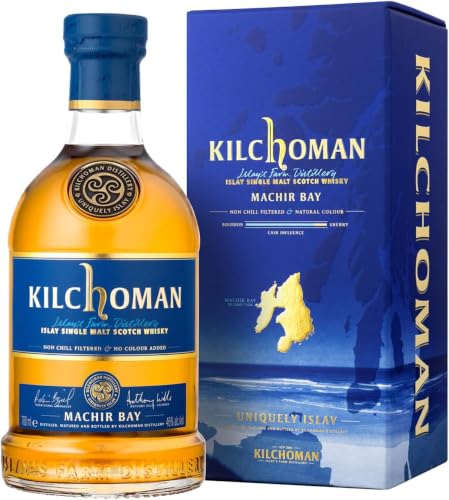
Kilchoman Machir Bay
Kilchoman is a small farm distillery on Islay that produces comparatively young but very lively whisky. Machir Bay shows robust peat smoke, played around by citrus and vanilla, and seems fresh and boisterous. Bottled at 46 percent, neither chill-filtered nor coloured, it is an exciting counter-proposal to the big names.
Where the smoke comes from: peat and malting
The typical smoky flavour does not arise in the cask but already during the malting of the barley. To stop germination, the moist barley is dried, and in some distilleries this happens over a fire of peat. The smoke of this peat fire permeates the malt and deposits there the aroma compounds that we later perceive as smoky, earthy or medicinal.
Responsible for this are so-called phenols. Their content is measured in ppm (parts per million) and gives a rough indication of how heavily peated a malt is. Higher values tend to mean more smoke, even though the actual impression in the glass depends on many further factors, such as the way of distilling, the cask and the age.
Peat itself is plant material compacted over millennia from bogs. Depending on origin, its smoke smells different, sometimes more of campfire and soot, sometimes of iodine, seaweed and sea. A Laphroaig 10 with its medicinal note therefore tastes completely different from an earthy-sweet malt from the mainland.
Islay and other smoky regions
The undisputed centre of smoky whisky is the Hebridean island of Islay off the west coast of Scotland. Here famous distilleries such as Ardbeg, Lagavulin and Laphroaig stand in a row, plus the somewhat gentler houses Bowmore and Caol Ila and the young farm distillery Kilchoman. The salty sea wind and the local peat shape the unmistakable, maritime character of these malts.
Smoke is not found only on Islay, though. On the Isle of Skye, Talisker produces a smoky-peppery island malt, and on Orkney or in the Highlands too there are bottlings with a discreet peat note. The smoke there is usually more restrained than on Islay and often mingles with honey, fruit or sherry.
You will find an overview of all the smoky candidates from our catalogue in the smoky whiskies category. If you would rather compare the whole Scottish style, take a look at the Scotch catalogue.
How smoky is smoky? From light to peat monster
Smoky is not the same as smoky. The range runs from a barely perceptible hint to the uncompromising peat monster that fills the whole nose. For getting into the style, it is worth beginning with a moderate bottling and working up slowly.
The following overview roughly ranks some of our recommendations by smoke intensity. It is deliberately simplified, because how strongly a whisky acts also depends on alcohol content, cask and your own perception.
| Smoke level | Example | Character | For whom |
|---|---|---|---|
| light | Talisker 10 | maritime, peppery, discreet smoke | gentle entry |
| medium | Bowmore 12, Caol Ila 12 | balanced, honey, citrus | first real Islay |
| robust | Laphroaig 10, Lagavulin 16 | medicinal, dense peat | the experienced |
| very robust | Ardbeg 10, Laphroaig Quarter Cask | tar, espresso, intense | peat lovers |
In the end, rely on your own palate. A Bowmore 12 or Caol Ila 12 is a good starting point before you venture on to the very robust representatives.
Enjoying smoky whisky properly
Smoky whiskies unfold best neat at room temperature. A bulbous nosing glass bundles the aromas and lets you perceive the smoke, the sea salt and the sweet undertones separately. Take your time and first smell calmly before you take the first small sip.
A few drops of water can also help with robust peated whiskies to open closed aromas and soften the sharpness. Smoky malts also go superbly with hearty food, such as dark chocolate, aged cheese or grilled dishes. You will find inspiration for this in our guide to whisky and BBQ pairing.
Because these whiskies are so intense, small measures are enough for a big experience. Enjoy consciously and in moderation. You will find more fundamental tips on glass, water and temperature in our guide on how to drink whisky properly. Unsure which style suits you? The Whisky Finder helps with a few questions.
Conclusion: the way into the world of peat
Smoky whiskies are a fascinating chapter of their own, best opened up step by step. Begin with a balanced Islay such as Bowmore or the maritime Talisker before you venture on to the dense peat bombs of Ardbeg, Lagavulin or Laphroaig.
Whether gentle smoke or uncompromising peat, among our eight recommendations there is something for every taste. Compare the prices calmly before you buy, for instance via our whisky comparison, and browse through the further smoky bottlings in the Smoky category. If you are still right at the beginning after all, our guide to the best whiskies for beginners will help first.
Related guides
Transparency note: This guide was created with AI assistance and reviewed by our editors before publication. All recommended bottles come from our real catalogue, and prices are guide values. The product photos are not AI images. How we use AI