Six bottles to get to know both worlds
Three characterful bourbons and three classic Scotch examples, with which you can experience the difference directly in the glass.
Advertisement: links to Amazon are affiliate links. If you buy through them, we earn a commission. The price you pay does not change.

Buffalo Trace
The epitome of modern Kentucky bourbon: vanilla, caramel and brown sugar with delicate spice. Round, approachable and honestly priced. If you only want to try one bourbon, take this one.

Maker's Mark
Uses wheat instead of rye in the recipe and therefore tastes especially soft and sweet. Caramel, honey and red fruit make it the friendliest way into the bourbon world.

Woodford Reserve
The elegant example: more spice, dark chocolate and delicate oak. It shows that bourbon can be not only sweet and powerful but also multi-layered and polished.
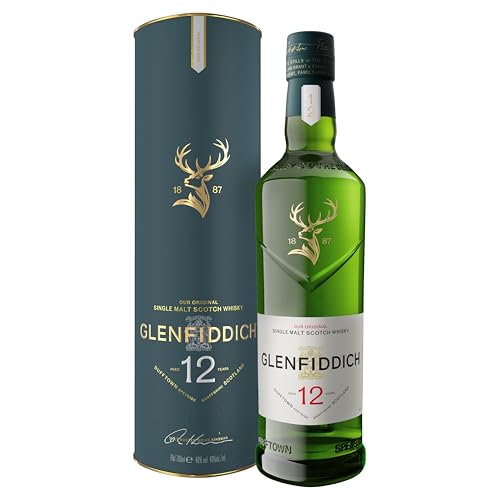
Glenfiddich 12
The best-selling single malt in the world and a perfect example of fruity Speyside Scotch: pear, apple and delicate oak, light and clear. The counter-proposal to American sweetness.

Highland Park 12
A Scot that unites many facets of its homeland: heather honey, sherried fruit and a delicate hint of smoke. Ideal for experiencing the many layers of Scotch with a single bottle.

Talisker 10
Smoke, pepper and sea salt from the Isle of Skye. This maritime spice has no counterpart on the bourbon shelf and shows how wide the flavour spectrum of Scotch extends.
What bourbon is: the rules behind the name
Bourbon is American whiskey with clear legal requirements. The mash must consist of at least 51 percent corn, it is distilled to no more than 80 percent ABV, and it is matured exclusively in new, charred oak casks. Bourbon may be made anywhere in the USA, even though Kentucky remains the undisputed heart of the category.
Two of these rules shape the flavour especially strongly. The high corn content brings a natural sweetness reminiscent of caramel and popcorn. And the fresh, heavily toasted wood gives up an enormous amount in a short time: vanilla, coconut, roasted notes and a strong oak spice. That is why even young bourbons seem surprisingly intense.
Variants such as rye whiskey with at least 51 percent rye set different accents but stay within the same system. How spicy that can taste is shown by Bulleit Bourbon with its high rye content. A deeper introduction to the American world is offered by our guide to the best bourbons.
What Scotch is: origin as law
Scotch whisky may only be made in Scotland and must be matured there in oak casks for at least three years. The most important category is single malt: 100 percent malted barley, distilled in the copper stills of a single distillery. Alongside it stands blended Scotch, that is blends of several distilleries, which make up the majority of the market.
Unlike bourbon, Scotch matures almost always in used casks, mostly former bourbon or sherry casks. The wood therefore works more slowly and more finely. Instead of flooding the spirit quickly with vanilla and toast, it leaves room for the distillery character and builds up fruit, spice and depth in layers over the years.
Then there is the regional diversity: light, grassy Lowland malts, fruity Speysiders such as Glenfiddich 12, robust Highlands and the smoky malts of the island of Islay. How different Scotland can taste is shown by our guide to the whisky regions of Scotland.
Production and raw materials compared directly
The most important differences can be laid out cleanly side by side. The table shows where bourbon and Scotch part ways and why that is so clearly tasted in the glass.
| Aspect | Bourbon | Scotch |
|---|---|---|
| Origin | USA, heart in Kentucky | Scotland only |
| Main grain | at least 51 percent corn | malted barley, also wheat in grain whisky |
| Casks | new, charred oak | used bourbon and sherry casks |
| Minimum maturation | no general requirement | at least 3 years |
| Typical flavour | vanilla, caramel, roasted notes | from light and fruity to peat-smoky |
| Spelling | whiskey with an e | whisky without an e |
Both systems produce excellent whisky. They simply answer the same question differently: bourbon draws its flavour mainly from fresh wood and corn, Scotch from distillery character, time and cask history.
How differently the two taste
At its core, bourbon tastes sweet and warm. Vanilla, caramel, coconut and cinnamon are almost always at the centre, with more fruit or more spice depending on the recipe. A Maker's Mark shows the soft, sweet side, a Wild Turkey 101 the robust one. The range is real, but it plays out within a recognisable family taste.
Scotch, by contrast, is less a flavour than a spectrum. Between a light, floral Lowlander and a peat-smoky Islay malt such as Laphroaig 10 lie worlds. What most Scots have in common is a drier basic nature and more cereal, malty tones, while the American vanilla sweetness stays more subtle.
That is why the honest answer to the question of the better style is: it depends on what you are looking for. You will find reliable warmth and sweetness faster on the bourbon shelf. The bigger stylistic journey is offered by Scotch, from aperitif malt to smoke bomb.
What suits whom: beginners, cocktails, connoisseurs
For beginners, bourbons are often the easier start, because their sweetness feels familiar and hardly a bottle surprises unpleasantly. You can give Buffalo Trace or Maker's Mark as a gift practically blind. With Scotch, it is best to start with a mild Speysider before venturing into more robust styles. More on this in the guide to the best whiskies for beginners.
In cocktails, bourbon plays to its strengths fully. The Old Fashioned, Whiskey Sour and Manhattan were invented around its sweet-spicy core, and inexpensive bourbons forgive mixing without any trouble. Scotch is rarer in cocktails but can shine in the Penicillin or Rob Roy, for example. You will find recipes and suitable bottles in the guide to whisky cocktails.
Connoisseurs who drink neat do excellently with both worlds. A Woodford Reserve offers astonishing depth for its money, a Highland Park 12 more facets per sip. Many experts, incidentally, end up exactly where they never wanted to: with one open bottle from each camp.
Price and getting started: what you get for your money where
Under 30 euros, bourbon offers the higher hit rate. The big Kentucky houses deliver remarkably much character in this class, as our overview of the best whiskies under 30 euros shows. Good single malt starts somewhat higher, but its variety grows rapidly from around 30 to 50 euros.
Toward the top, the two worlds open up differently. With Scotch, age and rarity drive prices steeply upward, and three-figure sums for aged malts are normal. Premium bourbons often stay cheaper in Germany but are harder to get, because the sought-after bottles are rarely imported officially.
For your first shelf we simply recommend one of each: a characterful bourbon at around 25 to 35 euros and a classic single malt in the same class. That covers two worlds and quickly shows you which direction your taste leans. The whisky comparison puts candidates directly side by side.
Our conclusion: not rivals but complements
In the end, bourbon against Scotch is not a duel but a question of mood. The sweet warmth of a good bourbon and the quiet depth of an aged malt do not exclude each other, they complement each other. Anyone who knows both styles drinks more consciously and buys more wisely.
If you want to compare in a structured way, try the six bottles from this guide in pairs: Buffalo Trace next to Glenfiddich 12, Woodford Reserve next to Highland Park 12, Wild Turkey or Bulleit next to Talisker 10. You can hardly taste the two philosophies more clearly.
And if you want to go deeper afterwards, our guides lead you on: into the regions of Scotland, to the best bourbons or, via the whisky finder, straight to the right bottle for your taste. In any case, enjoy mindfully and responsibly.
Related guides
Transparency note: This guide was created with AI assistance and reviewed by our editors before publication. All recommended bottles come from our real catalogue, and prices are guide values. The product photos are not AI images. How we use AI