Six strong bottlings from 50 to over 60 percent
Six whiskies with a high bottling strength, from the inexpensive powerhouse to sherry might, each with an honest assessment.
Advertisement: links to Amazon are affiliate links. If you buy through them, we earn a commission. The price you pay does not change.

Aberlour A'bunadh
The most famous sherry malt at cask strength: around 60 percent ABV, unfiltered, pure oloroso power with raisin, dark chocolate and spice. With a little water it opens up layer by layer. A classic of the category.

Conceived at 51.4 percent ABV straight from the cask, the Japanese bottling combines power with remarkable elegance: dried fruits, spice and oak in perfect balance. One of the best proofs that strength and finesse go together.

Wild Turkey 101
Not an official cask strength, but at 50.5 percent ABV close to it and unbeatably cheap. Caramel, cinnamon and toasted oak with emphasis. The perfect test of whether higher strengths suit you, with no risk to the budget.
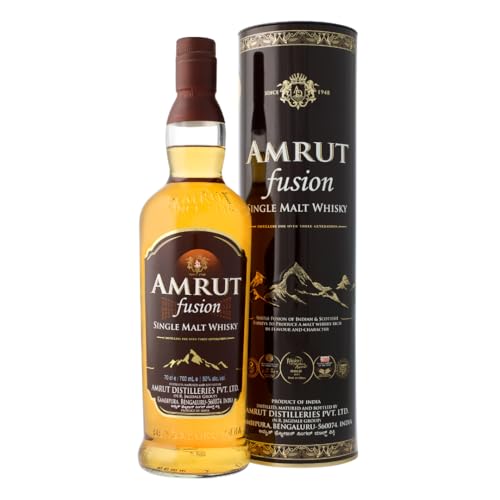
Amrut Fusion
The Indian bottling at 50 percent ABV combines Scottish and Indian barley, and the hot climate speeds up maturation enormously. Tropical fruit, malt and a hint of smoke in high density. Exotic at its best.

Bruichladdich The Classic Laddie
At 50 percent ABV, uncoloured and not chill-filtered, the Islay malt stands for uncompromising transparency. Entirely unpeated, though: citrus, barley and sea breeze. It shows how fresh high strength can taste.

Lagavulin 12
The annual cask strength special bottling from the Islay giant: brighter, fresher and wilder than the famous 16, with sharply drawn smoke and great clarity. For peat fans the top class.
What cask strength means exactly
Whisky leaves the still at around 70 percent alcohol and is usually reduced to about 63 percent before being filled into the cask. During maturation a small part evaporates year after year, the famous angel's share. After ten or more years, the cask typically still holds 50 to 60 percent, depending on climate, warehouse and cask type.
Before normal bottling, the whisky is then brought down to drinking strength with water, usually 40 to 46 percent. This is exactly the step that a cask strength bottling leaves out: the whisky goes into the bottle at the strength it actually had in the cask. That is why the percentage also varies from batch to batch, and with some series it is printed small on the label for that reason.
Terms such as cask strength, barrel proof or simply full strength mean the same principle. Related is the term single cask, which however describes something different: a whisky from a single cask, which is often, but not always, bottled at cask strength.
Why more percent does not simply mean more burn
The biggest worry about cask strength is: surely it just burns. In fact alcohol carries aromas, and the more so the less the whisky has been diluted. A good cask strength bottling therefore above all tastes denser: more fruit, more spice, more texture. The intensity affects the whole experience, not just the alcohol.
There is also a matter of craft: for cask strength, distilleries as a rule select their best casks, because nothing can be hidden behind dilution here. An Aberlour A'bunadh at around 60 percent ABV therefore does not seem like a sharper standard Aberlour but like a concentrated, darker version with a personality of its own.
Even so, neat at 60 percent, cask strength is not for the unprepared palate. Small sips, time in the glass and above all water are not a weakness here but part of the concept. How to do it properly is shown in the next section.
Adding water: how to find your strength
The most important rule is: drop by drop. Add a few drops of still, soft water to the glass, swirl briefly and taste. Repeat until the whisky feels right to you. There is no going back, so it is better to approach slowly. A pipette or a teaspoon helps with dosing.
Something interesting happens chemically: water breaks up the bonds between alcohol and aroma compounds and releases new scent notes, which experts call opening up the whisky. Heavy sherry and peat bombs in particular often show facets with a little water that stay hidden when neat. A whisky at 58 percent brought down to 46 is not a watered-down whisky but the same whisky at your preferred strength.
That is exactly the real luxury of cask strength: you decide for yourself instead of taking over the distillery's decision. You will find more general tips on glass, temperature and nosing in the guide how to drink whisky properly.
Cask strength versus standard bottling compared
Whether the extra cost of cask strength is worth it depends on what you are looking for. The overview sets both worlds side by side honestly.
| Aspect | Standard bottling | Cask strength |
|---|---|---|
| Alcohol | 40 to 46 percent | usually 50 to 62 percent |
| Aroma density | good, but diluted | maximum, full texture |
| Ready to drink | straight away | neat only for the experienced, water recommended |
| Price per bottle | cheaper | higher, but more substance |
| Flexibility | strength is fixed | you dilute to taste |
| Typical buyers | everyday, entry level | enthusiasts, collectors, the curious |
Incidentally, once you factor in the higher strength, the extra cost is often put into perspective: a cask strength bottle brought down to drinking strength with water yields noticeably more drams than a normal one.
These bottlings are worth starting with
The gentlest entry is Nikka From The Barrel: at 51.4 percent ABV it sits at the lower end of the category and is composed so evenly that even beginners can enjoy it neat. Similarly approachable is the Classic Laddie at exactly 50 percent, fresh, citrusy and completely without smoke.
If you are looking for the sweet, dark direction, reach for Aberlour A'bunadh, the archetype of the sherry monster. For friends of exotic profiles, Amrut Fusion from India is a discovery, its hot maturation packing enormous density into a few years. And peat fans find in the annual Lagavulin 12 cask strength edition the wild sister of the famous 16.
You can test the principle almost for free with Wild Turkey 101: not an official cask strength, but at 50.5 percent ABV close enough to feel whether higher strengths suit you. If so, the next chapter awaits in the best sherry cask whiskies.
Who cask strength is for and who it is not
Cask strength is worthwhile for everyone who tastes whisky deliberately: those who nose, compare, experiment with water and want to understand how a bottling is built. Anyone who otherwise quickly feels that a whisky is too thin or too tame for them will find the answer here. There is more substance per sip nowhere else.
Cask strength is less suitable as a first whisky ever or as a pure mixer. If you are just starting out, you will have more fun with a good standard bottling, as presented in our guide to the best whiskies for beginners. And in cocktails the fine cask aroma would simply be wasted, even if a robust Old Fashioned can benefit from it.
An honest note to finish: high strength also means more alcohol per glass. If you enjoy cask strength, it is best to drink smaller amounts, more slowly and with water on the table. Quality over quantity is not a platitude here but the only sensible way to experience these whiskies.
What to look out for when buying cask strength
First: look at the batch statement. Many cask strength series appear in numbered batches whose strength and character vary slightly. That is not a defect but part of the appeal, though it explains why tasting notes for the same bottle sometimes differ.
Second: look out for the statements not chill-filtered and without colouring, which are almost standard with cask strength. At high strength the whisky stays clear even unfiltered, and only with water can a slight cloudiness appear. It is harmless and even a sign of authenticity. What lies behind the terms is also explained in our guide to cask types.
Third: compare prices per moment of enjoyment rather than per bottle. A cask strength bottling at 80 euros that you dilute to drinking strength really delivers more than a 60-euro bottle at 40 percent. With our whisky comparison you can put candidates side by side with guide prices and then decide at your leisure.
Related guides
Transparency note: This guide was created with AI assistance and reviewed by our editors before publication. All recommended bottles come from our real catalogue, and prices are guide values. The product photos are not AI images. How we use AI