Strong NAS whiskies and reliable age statements
Three convincing whiskies with no age statement at all and three classic examples with a year, so that you can compare both camps directly.
Advertisement: links to Amazon are affiliate links. If you buy through them, we earn a commission. The price you pay does not change.

A NAS whisky that shows how strong a bottling without an age statement can be. Robust, spicy and multi-layered, with dried fruits, spice and oak. Proof that quality does not depend on a number.

Aberlour A'bunadh
A celebrated sherry malt at cask strength, with no age statement at all. Dense, powerful and full of raisin, dark chocolate and spice. Many connoisseurs value it more than some considerably older whiskies.

Laphroaig Quarter Cask
A NAS Islay malt that deliberately relies on small casks rather than many years. The intense wood contact brings bold smoke, sweet oak and coconut. A textbook example of how the choice of cask is often more important than age.
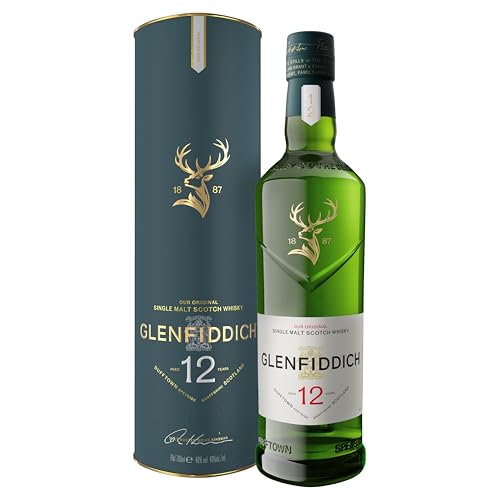
Glenfiddich 12
One of the best-known age statements in the world and a reliable starting point. Twelve years of maturation give it fruity notes of pear and apple with delicate oak. It shows how round a classic 12 can taste.

Lagavulin 16
A classic in which the 16 years really count. The long maturation weaves dense peat smoke with sherry and sweetness into great depth and calm. A prime example of when age makes a real difference.

Talisker 10
An age statement that fits perfectly. Ten years are enough for this island malt to develop its distinctive blend of smoke, pepper and sea salt. It proves that a well-chosen ten years is often entirely sufficient.
What the age statement on a whisky means
The age statement on a bottle, such as 12 or 18, gives the number of years the whisky has matured in the cask at minimum. A frequently overlooked detail is decisive here: the statement always refers to the youngest whisky it contains. If older casks are also used in a twelve-year-old, the 12 stays on the label anyway, because the youngest cask is twelve years old.
Maturation also only counts while the whisky is in the wooden cask. Once it is in the bottle, it practically stops ageing. A whisky bought at twenty years that then sits in a cupboard for ten years remains a twenty-year-old in terms of flavour. That sets whisky clearly apart from wine.
A high number therefore stands for a long cask maturation, not automatically for quality. It only tells you how much time the spirit had to work with the wood, nothing more. How good the result tastes in the end depends on many other factors, which we will look at more closely in a moment.
What NAS, No Age Statement, means
NAS stands for No Age Statement, that is a whisky with no age statement on the label. That does not mean it has to be particularly young. It only means that the producer has decided not to name a year. The bottle may contain a varied mixture of younger and older casks.
This leaves the blender freer. Instead of being bound to a fixed minimum number, he or she can select precisely the casks that fit the desired flavour picture. Many NAS whiskies are deliberately composed towards a particular character, for example especially smoky, especially sherry-led or especially balanced.
Well-known examples such as Nikka From The Barrel or Laphroaig Quarter Cask show that NAS on its own says nothing about quality. Both are considered excellent and are highly rated by many enthusiasts, with no year on the bottle at all.
Why there are more and more NAS whiskies
The boom in NAS whiskies has two main reasons. The first is simply demand. Whisky has become so popular worldwide that the well-filled old stocks are running short in many places. Anyone who wants to sell a twelve-year-old today had to guess twelve years ago how large demand would one day be, which hardly anyone could predict that precisely.
The second reason is freedom for the blender. Without the shackle of a minimum number, he or she can combine younger, very active casks with older, calmer ones and shape them into a round whole. Younger whisky from a very good cask in particular can seem surprisingly mature. NAS makes it possible to use such casks sensibly and flexibly.
Critics, however, also see in it a convenient way to charge more for younger and therefore more cheaply produced whisky. Both may be true. It is therefore worth not condemning NAS whiskies across the board but judging each one on taste and price. The whisky comparison helps you put candidates side by side.
Is an older whisky automatically better?
The short answer is no. A higher age does not automatically mean more quality or more enjoyment. A long maturation can deepen a whisky wonderfully, but it can also overshape it. It is about balance, not the bare number on the label.
With very long storage there is a risk of over-oaking. The whisky then takes on so much wood that it becomes bitter, dry and too tannic, and delicate distillery notes are masked. Whether that happens depends heavily on the cask, the climate in the warehouse and the character of the spirit. An active cask works faster than a tired one.
That is why a well-built ten- or twelve-year-old can taste livelier and more coherent than a tired twenty-year-old. The following overview sets the two worlds side by side so that you can see their strengths and weaknesses at a glance.
| Aspect | Age statement | NAS |
|---|---|---|
| Meaning | age of the youngest cask | no year given |
| Strength | traceable, often more depth | flexibly composed for flavour |
| Risk | expensive, risk of over-oaking | age remains opaque |
| Price | rises sharply with the years | often cheaper, but not always |
| Ideal for | fans of classic maturity | curious flavour seekers |
Neither side is fundamentally superior. What remains decisive is the taste in the glass and the ratio of price to enjoyment.
When age really counts
There are certainly cases in which a high age statement makes a real difference. Some distilleries and styles benefit noticeably from long maturation, because heavy, complex aromas only unfold fully over the years. Robust, sherry-led or smoky malts can gain enormous depth through long storage.
A fine example is Lagavulin 16, in which the sixteen years weave the powerful peat smoke together with sweetness and maturity into great harmony. A Glenfiddich 18 also shows how additional years can make ripe fruit and oak seem more elegant. Here the maturation pays off audibly.
Just as often, though, a younger statement fits perfectly. A Talisker 10 or a Glenfiddich 12 needs no higher number to taste round and characterful. Age therefore counts where the style demands it and takes a back seat where freshness and balance are in the foreground.
Strong NAS whiskies that lack the number
That a missing age statement does not have to be a flaw is shown by some of the most popular bottles of all. The powerful Nikka From The Barrel from Japan, for example, is regularly praised by critics and offers remarkable richness for its price, with no year at all.
Laphroaig Quarter Cask likewise deliberately relies on the choice of cask rather than many years. Through maturation in small casks with especially much wood contact, the Islay malt quickly gains spice and depth. The result is intense and highly esteemed, even though no age statement appears on it.
Even in the gentle range there are strong NAS examples, such as the harmonious Hibiki Japanese Harmony. If you are unsure whether a NAS whisky suits you, approach it via a mild candidate, such as our guide to the best whiskies for beginners also presents.
What you should really look for when buying
Instead of looking only at the number, it is worth looking at the overall picture. More important than age are often the type of cask, the bottling strength and the question of whether the whisky has been coloured or chill-filtered. These factors often shape the flavour more strongly than a few years more or less in the cask. How much the cask counts is shown by our guide to whisky cask types.
So do not take a high age statement as the sole seal of quality, and do not take a missing age as a warning sign. Instead, read tasting notes, pay attention to the cask types and compare the price with what the bottle actually offers. That way you make considerably smarter decisions than from the bare year alone.
In the end, all that counts is what you like in the glass. Deliberately try a good NAS whisky next to a classic age statement and decide for yourself, instead of simply trusting a number. Use the whisky finder for this or put two bottles side by side in the whisky comparison, and in any case enjoy mindfully and responsibly.
Related guides
Transparency note: This guide was created with AI assistance and reviewed by our editors before publication. All recommended bottles come from our real catalogue, and prices are guide values. The product photos are not AI images. How we use AI