Typical examples from both worlds
To make the theory tangible, here are two well-known single malts and two very popular blends. That is the best way to taste the difference for yourself.
Advertisement: links to Amazon are affiliate links. If you buy through them, we earn a commission. The price you pay does not change.
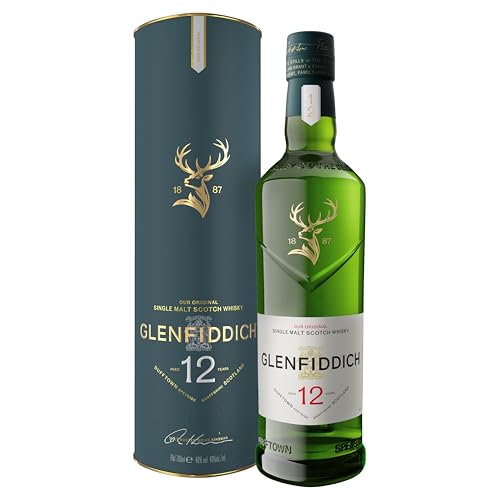
Glenfiddich 12
A classic single malt from a single Speyside distillery. Fruity with pear and apple, soft and uncomplicated. A perfect example of how clearly the signature of a single house can come through in the glass.

Glenlivet 12
Also a Speyside single malt, but with a character of its own: lighter, more floral, with a little pineapple. A direct comparison with the Glenfiddich shows how different two malts from the same region can be.

Johnnie Walker Black Label 12
One of the most famous blends in the world, mixed from many malt and grain whiskies. Round, lightly smoky and very balanced. A textbook example of how harmonious a good blend can be.

Monkey Shoulder
A blended malt made from three Speyside malts, so with no grain whisky at all. Soft and sweetish with vanilla and orange, a good representative of the often underrated middle category.

Chivas Regal 12
A soft, honeyed blended Scotch that is especially approachable. It shows that blends can be not only inexpensive but also elegant and suited to everyday drinking.
What exactly a single malt is
A single malt comes from a single distillery and is made exclusively from malted barley. The word single therefore does not refer to a single cask but to the one distillery. Malt points to the malt, the germinated and re-dried barley that gives the whisky its backbone.
Within one bottling, many casks and vintages from that one distillery may be married together. A single malt is therefore not necessarily the product of a single cask, but the signature of one house. That is precisely why a Glenfiddich 12 tastes different from a Glenlivet 12, even though both come from Speyside.
Single malts are regarded as the most characterful examples of their region, because the style of a distillery shines through clearly. If you want to taste the differences between the Scottish regions, the Scotch catalogue offers the full range, from mild Speyside to smoky Islay.
What makes a blend
A blended Scotch is a mixture of several whiskies from different distilleries. Malt whiskies made from malted barley are combined with lighter grain whiskies made from other cereals. The aim is a round, consistent flavour that tastes reliably the same year after year.
The grain share usually makes blends softer, milder and cheaper than pure malts. A good master blender combines dozens of individual whiskies into a harmonious whole, much as a conductor leads an orchestra. Well-known examples are Johnnie Walker Black Label and Chivas Regal 12.
To this day, blends make up the largest share of the whisky sold worldwide. They are the uncomplicated all-rounders for everyday drinking, for long drinks and for getting started. If you want to sample widely and cheaply, blends are a good place to be, as our guide to the best whiskies for beginners shows.
Blended malt and single grain: the two other categories
Between single malt and the classic blend there are two categories that often cause confusion. A blended malt combines malt whiskies only, from several distilleries, with no grain at all. It therefore unites the character of true malts with the balance of a blend, as in Monkey Shoulder, for example.
A single grain, in turn, comes from a single distillery but is made from cereals other than pure malted barley. It is usually lighter and sweeter and often forms the base of large blends. Both categories are smaller but exciting if you want to dive deeper into the world of whisky.
Is single malt better than blend?
This is the most persistent myth of all: that single malt is automatically better than blend. That is not true. A carefully blended whisky can be more balanced and more pleasant than a mediocre single malt, and many high-priced blends compete at the very top in terms of flavour.
What is true is that single malts often taste more distinctive and characterful, because only one distillery sets the tone. Blends, in return, aim for harmony, consistency and approachability. It is therefore less a question of better or worse than of a different ambition.
In the end, only your own taste decides. Try both worlds at your leisure and put them side by side in the whisky comparison instead of being guided by prejudice.
| Feature | Single malt | Blend |
|---|---|---|
| Origin | one distillery | several distilleries |
| Grain | malted barley only | malt and grain |
| Character | distinctive, regional | round, harmonious |
| Price | usually higher | usually cheaper |
| Ideal for | mindful tasting | everyday and cocktails |
This comparison is deliberately simplified. In both categories there are inexpensive entry-level bottles and expensive top bottlings.
When each whisky is worth it
For mindful tasting on a quiet evening, a single malt plays to its strengths, because you can explore its character in peace. For everyday drinking, for guests or for cocktails, a good blend is often the smarter and cheaper choice.
Both are suitable for getting started, and a mild blend is often the gentler first step. Over time you will find out whether the variety of single malts or the balance of blends appeals to you more. If you are unsure, our whisky finder can help with just a few questions.
How to recognise the category on the label
A glance at the label quickly tells you what you are dealing with. If it says single malt, the whisky comes from one distillery and consists only of malted barley. The designation blended Scotch whisky stands for the classic mixture of malt and grain from several houses.
If you find the statement blended malt, it is a mixture of pure malts without grain. Single grain, in turn, denotes a grain whisky from a single distillery. With this knowledge you can place every bottle on the shelf correctly.
Also pay attention to the origin, because Scotch, Irish and bourbon each follow their own legal rules. If you want to compare different categories directly, our whisky comparison will help you do so.
Conclusion: not an either-or
Single malt and blend are not opponents but two routes to good whisky. The single malt stands for the unadulterated character of one distillery, the blend for the art of harmonious mixing. Both have their place and their great examples.
Do not let yourself be guided by the idea that one is nobler than the other. Work your way through both worlds, for example with a fruity Speyside malt and a round blend, and decide for yourself. You will find suitable candidates in the Scotch catalogue.
Related guides
Transparency note: This guide was created with AI assistance and reviewed by our editors before publication. All recommended bottles come from our real catalogue, and prices are guide values. The product photos are not AI images. How we use AI