8 recommended Islay whiskies at a glance
These eight single malts cover the whole range of the island, one flagship per distillery, from powerful peat monsters to unpeated malt whisky. All are readily available. Prices are guide values for orientation, and the price on the day may differ.
Advertisement: links to Amazon are affiliate links. If you buy through them, we earn a commission. The price you pay does not change.

Ardbeg 10
Ardbeg 10 is seen by many as the reference for peaty Islay whisky and offers astonishing character for approx. €39. On the nose, dense peat smoke, lemon and a tarry note meet, followed on the palate by smoke, espresso and dark chocolate. The very long, smoky-sweet finish delights peat fans, but at 46 percent this malt is quite powerful for beginners.

Lagavulin 16
Lagavulin 16 is the elegant classic of the south coast and one of the best-known Islay malts of all. Dense peat smoke, sherry and seaweed on the nose, bold smoke, dried fruits and a supporting sweetness on the palate, plus a very long, spicy finish. The 16 years of maturity make it wonderfully round, and it costs approx. €54.

Laphroaig 10
Laphroaig 10 is probably the most polarising Islay: you love it or you do not like it at all. Peat smoke, iodine and seaweed on the nose, distinctly medicinal on the palate with peat and sea salt, long, smoky and oily in the finish. For approx. €29 you get the most maritime, most uncompromising character on the island, ideal for anyone who really likes it rustic.

Caol Ila 12
Caol Ila 12 is the more approachable, fresher representative of the island and a good introduction to the robust Islay style. Peat smoke, lemon and maritime freshness on the nose, smoke, pepper and citrus on the palate, plus a long, dry finish. It seems lighter and less powerful than the south coast malts without being tame, and costs approx. €33.

Bowmore 12
Bowmore 12 comes from the oldest distillery on the island and combines smoke with a honeyed mildness. Smoke, honey and citrus on the nose, peat, honey and sea salt on the palate, smoky-sweet in the medium-length finish. The gentler, balanced style and the price of approx. €37 make it one of the best entry-level Islays for anyone who wants to get to know peat slowly.
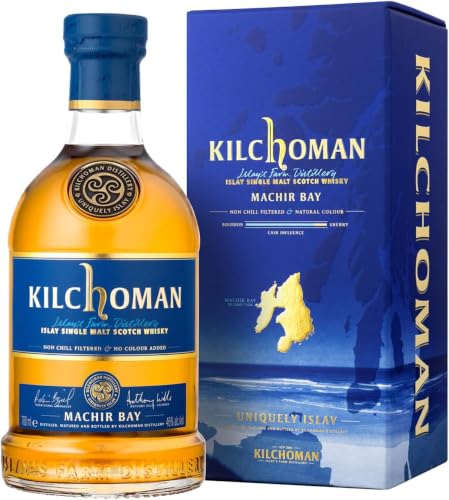
Kilchoman Machir Bay
Kilchoman Machir Bay comes from the island's youngest farm distillery and shows a lively, youthful Islay style. Peat smoke, citrus and vanilla on the nose, smoke, sea salt and sweet fruit on the palate, plus a long, smoky finish. At approx. €48, the young malt with no age statement impresses with fresh energy and plenty of coastal aroma.

Bunnahabhain 12
Bunnahabhain 12 proves that Islay can be mild too: this distillery in the north peats only very lightly and relies on sherry maturation. Sherry, nut, a hint of smoke and maritime saltiness on the nose, dried fruits, malt and sea salt on the palate, spicy in the finish. At a natural 46.3 percent and approx. €43, a characterful malt for anyone who prefers the peat in the background.

Bruichladdich The Classic Laddie
Bruichladdich The Classic Laddie is completely unpeated and shows the other side of the island, floral instead of smoky. Malt, blossom and citrus on the nose, barley, honey and a fresh mint on the palate, fresh and malty in the finish. At a robust 50 percent and approx. €38, an honest proof that Islay character does not necessarily mean smoke, ideal as a contrast programme.
What makes Islay whisky so special
Islay lies on the rugged west coast of Scotland, directly exposed to the Atlantic. The island is covered in thick layers of peat that formed over millennia from dead plants and mosses. This very peat is the secret: during malting, the germinating barley is dried over a peat fire, and the smoke settles on the grain with its so-called phenols. These phenols later provide the typical aromas of smoke, tar, iodine and seaweed.
Because the peat grows so close to the sea here, many Islay malts carry an unmistakably maritime, salty note. Smoky whisky is therefore closely associated with the island, even though it also comes from other coasts. If you are interested in the origin of the smoke in more detail, we explain it at length in our guide to the best smoky whiskies.
An unusually large number of distilleries work in a small area here, and you will find their bottlings gathered in our smoky whiskies category. A good first step into the world of peat is the balanced Bowmore 12, before you move on to the more robust examples.
The south coast: Ardbeg, Lagavulin and Laphroaig
On the south coast of Islay, around the Kildalton coast, the three most famous peat distilleries on the island lie close together. They stand for the most robust, most unmistakable Islay style and, for many, are the real reason to take an interest in the island at all.
Ardbeg 10 is regarded as the benchmark for clean, powerful peat with a delicate citrus note, while Lagavulin 16 seems especially elegant and round thanks to its 16 years of maturity and the sherry spice. Laphroaig 10 is the most medicinal of the three, with pronounced iodine and seaweed notes that you either love or avoid.
Anyone who tries these three side by side quickly understands that peat is not just peat. Each distillery has its own signature, even though only a few kilometres separate them. A direct look at prices and flavour profiles is worthwhile in the whisky comparison.
Not every Islay is a peat monster
Islay is often reduced to heavy smoke, but the island can do much more. North of the south coast, Caol Ila and Bowmore distil a more approachable, medium-bodied style that suits an introduction well. And in the far north, Bunnahabhain and Bruichladdich show that genuine Islay character can get by with almost no smoke.
Bunnahabhain 12 relies on gentle sherry maturation and only a hint of peat, while Bruichladdich Classic Laddie is even completely unpeated and floral. If you like Islay but are not looking for powerful smoke, you will find what you need here. The following overview sorts the distilleries by their typical peat intensity.
| Distillery | Peat intensity | Character | Example |
|---|---|---|---|
| Laphroaig | robust | medicinal, iodine, sea salt | Laphroaig 10 |
| Ardbeg | robust | tar, citrus, espresso | Ardbeg 10 |
| Lagavulin | robust | dense, sherried, elegant | Lagavulin 16 |
| Caol Ila | medium | fresh, maritime, citrus | Caol Ila 12 |
| Bowmore | medium | honey, gentle smoke | Bowmore 12 |
| Bunnahabhain | very light | sherry, nut, malt | Bunnahabhain 12 |
| Bruichladdich | unpeated | floral, barley, honey | Classic Laddie |
The classification describes the typical style of the standard bottling. Within each distillery there are outliers and special bottlings that can be peated considerably more or less heavily.
Which Islay suits you?
If you are new to peat, it is best to begin with a medium-bodied malt such as Bowmore 12 or Caol Ila 12. They show the Islay character without overwhelming you at once. If you do not generally like smoke so much, the sherried Bunnahabhain 12 or the unpeated Classic Laddie is a gentle way onto the island.
If, on the other hand, you are after full, uncompromising peat, there is no way around the south coast. Laphroaig 10 is the way into the heavy peat bombs, Lagavulin 16 the more mature, more elegant variant for a special evening. In price terms, almost all of our recommendations lie between approx. €29 and approx. €54, so good Islay does not have to be expensive.
If you are unsure which profile suits you, our whisky finder will help you in a few steps. For beginners we also recommend our guide to the best whiskies for beginners, which also presents milder alternatives beyond Islay.
Conclusion: the island of smoke, but not only
Islay is the most exciting small whisky island in the world: nowhere else will you find so much character in so small a space. For powerful peat, Ardbeg 10 and Laphroaig 10 are the honest classics, and if you like it milder, reach for Bowmore 12 or the unpeated Bruichladdich.
The island gives the most pleasure when you work your way slowly through its styles, from gentle smoke to the full peat bomb. How the island fits into the Scottish whisky landscape is explained in our guide to the whisky regions of Scotland. And if you want to dive even deeper into the smoke, browse our entire smoky whiskies category.
Related guides
Transparency note: This guide was created with AI assistance and reviewed by our editors before publication. All recommended bottles come from our real catalogue, and prices are guide values. The product photos are not AI images. How we use AI