7 recommended blended whiskies at a glance
The order is not a ranking but a price ladder from cheap to expensive. All seven are readily available. Prices are guide values for orientation; the price on the day may differ.
Advertisement: links to Amazon are affiliate links. If you buy through them, we earn a commission. The price you pay does not change.

Johnnie Walker Black Label 12
The best-selling premium blend in the world and, at approx. €16, the best starting point in this category. Twelve years minimum age, light smoke, vanilla and fruit on the nose, smoke, malt and spice on the palate, and a medium-length, smoky-sweet finish. It shows what a blend can do: smoke as seasoning rather than as a statement. Two honest caveats: at 40 percent ABV it stays thinner than a malt at 46 percent, and if you reject smoke on principle, you will not be happy here either.

Monkey Shoulder
Strictly speaking not a classic blend but a blended malt: it contains only malt whisky, no grain whisky. Matured in bourbon casks, which gives vanilla, honey and orange on the nose, malt, vanilla and spice on the palate, and a medium-length, sweet finish. At approx. €19 probably the best cocktail whisky in the catalogue. The flip side: no age statement, only 40 percent ABV, and drunk neat it lacks the depth that the price does not promise and does not have to deliver.

Dewar’s 12
The second-oldest blend name in Scotland and, at approx. €23, a direct alternative to Johnnie Walker Black Label, likewise with twelve years minimum age and 40 percent ABV. Important to note: we do not yet have reliable tasting notes for this bottling and will add them as soon as we can back them up. What we can give you are the hard facts. If you do not like the smoke in the Black Label, here is the unpeated counterpart.

Chivas Regal 12
The soft classic of the category and the blend that offends least. Honey, apple and vanilla on the nose, honey, caramel and fruit on the palate, and a medium-length, gentle finish. At approx. €29 a very reliable thing to bring along, because almost anyone can drink it. That is exactly where the criticism lies, though: it is built for agreeableness and quickly becomes boring. The Black Label costs less and has more to say.

Johnnie Walker Green Label
For us the most interesting blend on this list. 15 years minimum age, 43 percent ABV instead of the usual 40, matured in bourbon and sherry casks. Fresh grass, vanilla and a hint of smoke on the nose, malt, pepper and sandalwood on the palate, and a medium-length, lightly smoky and round finish. Approx. €32. The catch is the price: it costs noticeably more than the Black Label, and in this range it already competes with very good single malts.
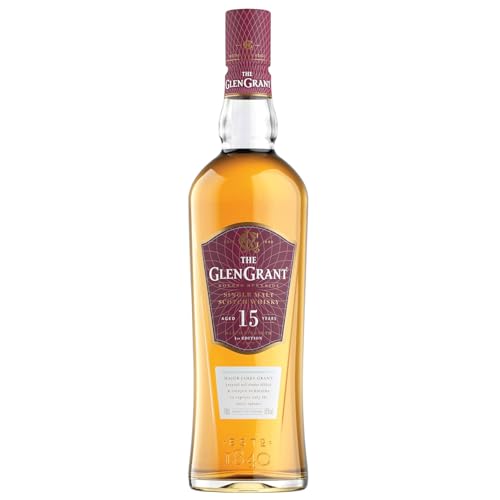
Grant 15
The outlier of the list, and specifically in bottling strength: 50 percent ABV is unusually high for a blend, most sit at 40. On top of that, 15 years minimum age for approx. €56. The honest caveat applies here too: we have not yet documented a detailed tasting profile for this bottling. The combination of age and high strength is nevertheless rare enough in the blend segment to be worth mentioning if you want some punch in the glass.
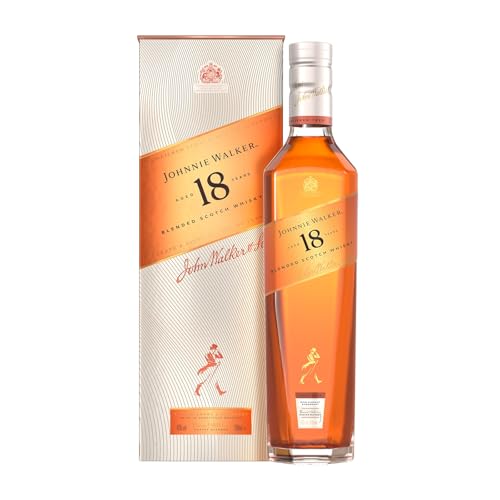
Johnnie Walker 18
The premium tier of the Johnnie Walker range with 18 years minimum age, for approx. €54. We do not yet carry tasting notes for it, so we stick to the facts. And one of them deserves a second look: the bottle comes at 40 percent ABV, the same strength as the Black Label that costs far less. Age alone does not make a better whisky. If you buy it, do so deliberately as a collector's or gift bottle, not as a sensory upgrade.
What a blended whisky really is
A blended Scotch whisky is a mixture of at least one malt whisky and at least one grain whisky, known as grain. Both must come from Scotland and have matured for at least three years in oak casks. That is the entire legal definition. Nobody prescribes how high the malt share is, and that is exactly where the big quality difference lies between a twelve-euro bottle from the supermarket shelf and a matured blend such as Johnnie Walker Green Label.
The difference between malt and grain lies in raw material and distilling method. Malt whisky is made exclusively from malted barley and distilled in batches in copper pot stills, which leaves a lot of aroma in the spirit. Grain whisky may also be made from wheat or maize and runs through a continuously operating column still. The result is distinctly more neutral, milder and considerably cheaper to produce. In a blend, the malt supplies the character and the grain the soft foundation.
It is important to distinguish this from blended malt. There, only malt whiskies from several distilleries are mixed, with no grain at all. Monkey Shoulder is such a case and therefore comes closer in flavour to a single malt than to a classic blend. We have written up the full comparison of both worlds in the guide single malt versus blend.
| Category | What is in it | Example from this list |
|---|---|---|
| Blended Scotch | malt from several distilleries plus grain | Johnnie Walker Black Label 12 |
| Blended malt | only malt from several distilleries, no grain | Monkey Shoulder |
| Single malt | only malt from a single distillery | not in this list |
| Single grain | only grain from a single distillery | not in this list |
All four categories are production terms, not quality grades. If you want to see how the single malt side feels, our buying guide to the best single malt whiskies takes you through all six Scottish regions.
Why blends do not deserve their bad reputation
The blend is not a budget version of the single malt but historically the older commercial product. When the column still made cheap grain whisky available in the 19th century, it was merchants such as Johnnie Walker, Chivas and Dewar's who built a milder, more consistent whisky from it and sold it worldwide. The single malt as an independently marketed category only really got going in the 1960s and 1970s. Without the success of blends, many distilleries would simply no longer exist today.
The real accusation against blends hits a different segment: the nameless standard bottlings without an age statement at the lower end of the price range. There the grain share is high, the average age low, and the whisky is meant as a mixing drink. As soon as a blend carries an age statement, the picture changes noticeably. All seven bottles on this list except Monkey Shoulder state twelve years or more, and the number always stands for the youngest drop in the bottle, not for the average.
What a blend actually offers less often than a malt is rough edges. It is built for balance, not for idiosyncrasy. If that bothers you, you are better off with single malt. If you are looking for a whisky that works on a Wednesday evening without demanding attention, that is exactly the advantage. Why the age statement tells you less than many think anyway is explained in the guide NAS versus age statement.
Blends in cocktails: where they play to their strength
There is one area in which a good blend is objectively superior to a single malt: in the mixed drink. A whisky highball, a whisky sour or a Rob Roy needs a whisky that fits in rather than dominates. A heavily peated Islay malt runs over every citrus note, and a pronounced sherry malt fights with the vermouth. The soft, malty core of a blend, by contrast, fits in almost everywhere, and the price does not hurt when you pour.
For cocktails we reach from this list for Monkey Shoulder, which was made for exactly that, and for Johnnie Walker Black Label 12 when the drink can take a smoky edge. You will find concrete recipes with quantities in our guide to whisky cocktails. If you prefer to mix with American whiskey, you will find what you need in the bourbon cocktails.
Conversely, that does not mean blends are only good for mixing. The Green Label with its 43 percent ABV is expressly a bottle for the glass with nothing added. How best to approach a whisky neat, which glass helps and how much water makes sense is covered in the guide how to drink whisky properly.
What a good blend should cost
The honest answer is: surprisingly little. The sweet spot for blended Scotch lies with the twelve-year-old standard bottlings, and in this window the Black Label 12 at approx. €16, Dewar's 12 at approx. €23 and Chivas Regal 12 at approx. €29 already give you three bottles with twelve years minimum age. Further candidates in this range are collected in our list of the best whiskies under 30 euros.
With the more upmarket blends things get trickier, because the competition changes there. A Green Label at approx. €32 no longer has to measure itself against other blends but against single malts such as Talisker 10 at approx. €26 or Highland Park 12 at approx. €29. This comparison is uncomfortable, but it is the honest one. What else is on offer in this price class is shown in our overview of the best whiskies under 50 euros.
With older blends you pay mainly for age, packaging and brand value. Johnnie Walker 18 at approx. €54 and the 21-year-old bottlings such as Chivas Regal 21 or Dewar's 21 are handsome bottles, but in sensory terms you generally get more intensity from a single malt for the same money. As a gift the sum looks different, which is why we wrote the guide whisky as a gift. Why the cask type decides more about flavour than the year is explained in the guide cask types explained.
Conclusion: which blend suits you?
If you only want to buy one bottle, take Johnnie Walker Black Label 12. Around 22 euros, twelve years, a fine smoky note, and it works neat as well as in a highball. If you do not like smoke, Chivas Regal 12 is the soft alternative and Dewar's 12 the cheaper one of the two. For the home bar there is no way around Monkey Shoulder.
If you want to know how far a blend can climb, the Green Label is the right choice, and if bottling strength matters more to you than tasting notes, Grant 15 with its 50 percent ABV. We do not advise against the very expensive blends, but we see them as a gift decision rather than an enjoyment decision. And one sentence that matters to us: for three of the seven bottles on this list we do not yet have documented aroma profiles. We do not add them just to make the text sound rounder.
If you are torn between two bottles, put them directly side by side in the whisky comparison. If you are unsure about the flavour profile, the whisky finder leads you to suitable suggestions in a few steps. You will find all Scottish bottlings from our catalogue, malts and blends alike, gathered in the Scotch whisky category. And if you are just starting out, the list of the best whiskies for beginners is a better starting point than any discussion of categories.
Related guides
Transparency note: This guide was created with AI assistance and reviewed by our editors before publication. All recommended bottles come from our real catalogue, and prices are guide values. The product photos are not AI images. How we use AI