10 recommended whiskies without smoke
This selection is deliberately broad: from the inexpensive Irish blend through mild Lowland and Speyside malts to rich sherry bombs and a soft bourbon. None of these bottles is made with peated malt. Prices are guide values for orientation, and the price on the day may differ.
Advertisement: links to Amazon are affiliate links. If you buy through them, we earn a commission. The price you pay does not change.

Tullamore Dew Original
The cheapest entry on this list and still cleanly made. Vanilla, green fruit and citrus on the nose, malt, vanilla and citrus on the palate, plus a gentle finish. Tullamore Dew is a blend of three grains and deliberately kept light, which makes it extremely approachable. You should not expect depth or complexity for the price, but as an everyday bottle and mixing base it is hard to beat.
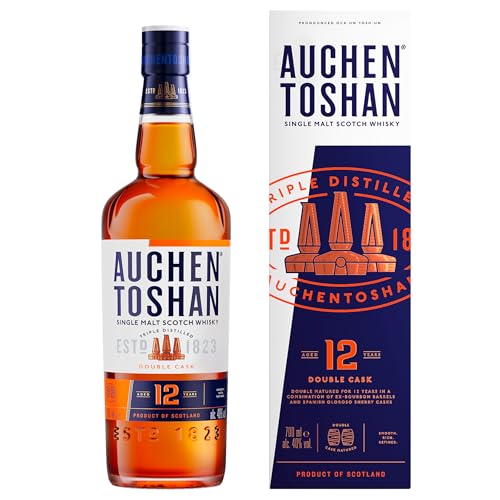
Auchentoshan 12
Auchentoshan is the only Scottish distillery that consistently triple distils, and you can taste it: the 12-year-old is one of the mildest single malts there is. Citrus, vanilla and almond on the nose, caramel, citrus and malt on the palate, medium-length and gentle in the finish. If you are coming from the smoke camp, this is the gentlest fresh start. At 40 percent it does stay delicate, though, so if you want punch and spice, look elsewhere.

Maker's Mark
A wheated bourbon: instead of rye, red winter wheat provides the spice, which makes it clearly softer and rounder than typical Kentucky bourbons. Vanilla, caramel and oak on the nose, caramel, wheat and vanilla on the palate, medium-length and sweet in the finish. Smoke plays no role in American whiskey anyway, and here the sweetness comes straight from the new, charred oak. This very gentleness is also the limit: you will not find peppery heat here.

Glenmorangie The Original 12
The benchmark for light, fruity Highland malt and, for many, the perfect first bottle of their own. Citrus, orange, ripe peach and mild vanilla on the nose, vanilla, honey, orange and peach on the palate, medium-length in the finish with orange and peach. Maturation exclusively in bourbon casks keeps it light and clear. The 40 percent makes it pleasing but also a little well-behaved, so if you want more power, look further down.

Glenlivet 12
Speyside in its pure state and one of the best-selling single malts worldwide. Pineapple, blossom and vanilla on the nose, fruity on the palate with honey and vanilla, medium-length and gentle in the finish. Glenlivet 12 matures in bourbon and sherry casks and sits almost exactly in the middle between light and sweet in flavour. This very middle position makes it a safe gift, although whisky nerds often find it too smooth.
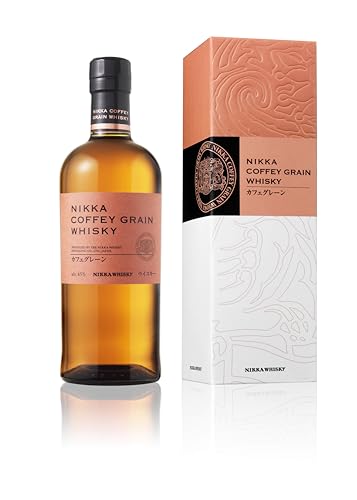
Nikka Coffey Grain
A single grain from Japanese Coffey stills, distilled predominantly from corn, and thus as far from peat as whisky can be. Vanilla, corn and citrus on the nose, vanilla, coconut and toffee on the palate, spicy-sweet in the finish. Despite 45 percent it seems creamy and thick, almost like liquid caramel. It is a very individual, sweetish style that polarises: if you like dry, malty whiskies, you will find it too lush.

GlenDronach 12
Here the list tips from light to dark. GlenDronach matures the 12-year-old in Pedro Ximenez and Oloroso sherry casks, and it turns out correspondingly rich: sherry, dried fruits and nuts on the nose, rich sherry sweetness, raisin and malt on the palate, long and sweet-spicy in the finish. The 43 percent gives it pleasant structure. If you are looking for light freshness, this is the wrong place, as this is a winter evening whisky.

Balvenie DoubleWood 12
The classic among sherry finishes: first a bourbon cask, then several months in a sherry cask, hence the name. Honey, sherry and vanilla on the nose, honey, dried fruits and spice on the palate, long and warm in the finish. Balvenie strikes the balance that many other sherry malts lack, sweet but not sticky. The only real criticism is the 40 percent, as a few percent more would suit it well.

Redbreast 12
Irish single pot still, that is distilled from malted and unmalted barley in the copper pot still, and one of the most highly rated whiskeys in the whole catalogue. Sherry, dried fruits and spice on the nose, creamy on the palate with nut, sherry and spice, long and spicy in the finish. This oily, creamy texture is typically Irish and entirely free of smoke. For approx. €47 it is a lot of whisky, but it needs a few minutes in the glass.
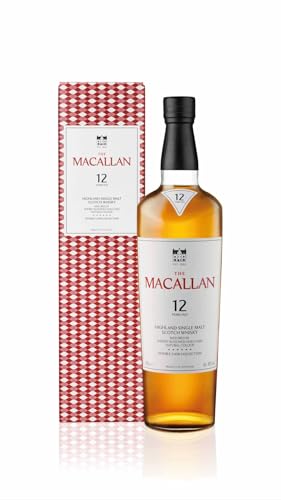
Macallan Double Cask 12
The upper end of this selection and the best-known sherry brand of all. The Double Cask matures in sherry-seasoned American and European oak: vanilla, honey and dried fruit on the nose, sherry, honey and orange on the palate, medium-length and sweet-spicy in the finish. It is more elegant and lighter than the GlenDronach but costs considerably more. Part of that price is the brand name, and you should know that before you buy.
How smoke gets into whisky in the first place
Smoke is not an ingredient or an additive but the result of a single production step. Barley must be malted before distillation, that is brought to germinate and then dried so that the germination process stops. Most maltings dry with hot air. Those who use peat burn dried moorland under the malt, and the smoke lays its aroma compounds directly onto the grain.
These aroma compounds are called phenols and are measured in ppm, that is parts per million. As rough guide values: unpeated malt is usually below 3 ppm, lightly peated at around 5 to 15 ppm, heavily peated at 30 to 50 ppm and more. Important here: the measurement is taken on the malt, not in the finished whisky. On the way through still and cask, a considerable share of the phenols is lost, which is why a high ppm figure alone says nothing about the amount of smoke you actually perceive.
A simple consequence follows for you as a buyer: peat is a deliberate style decision by the distillery and not something that happens by chance. Distilleries that buy in unpeated malt reliably produce smoke-free whisky, year after year. If you like a bottle such as Glenlivet 12, you can expect the same result from the next bottle of the same bottling. More on the cask types that shape the flavour afterwards can be found in the guide Cask types explained.
Without peat does not mean without character: the three directions
The most common mistake about smoke-free whisky is that it is automatically mild or arbitrary. In fact, the lion's share of flavour variety does not fall on the malt at all but on the shape of the still, fermentation time and above all the cask. Without smoke these factors simply emerge more clearly, because peat does not mask them. Our catalogue accordingly sorts smoke-free whiskies into three major flavour directions.
Fruity and light is by far the largest group and the classic way in: light fruit, citrus, vanilla, honey, mostly from bourbon casks. These include Glenmorangie The Original 12 and Auchentoshan 12. Sherry-sweet is the dark sister: dried fruits, raisin, nut, chocolate, shaped by Oloroso or Pedro Ximenez casks, as with GlenDronach 12. If you like this direction, you will find more of it in the guide best sherry cask whiskies.
Spicy and robust, finally, means pepper, oak, cinnamon and leather, often at higher alcohol strength. Almost all American whiskey falls into this category, because new, charred oak casks give up a lot of spice. Maker's Mark is the mildest example here. These three directions differ from one another more than some Islay differs from its neighbour, without a hint of smoke.
How to tell on the shelf whether a whisky smokes
There is no obligation to declare peat on the label, but there are reliable signals. The most important are origin and choice of words. If a bottle advertises with terms such as peated, smoky, peat, smoke, maritime or campfire, the matter is clear. Conversely, words such as smooth, mellow, fruity, honey, elegant or sherry almost always point to a smoke-free bottling.
The second most important signal is the region, though only as a probability and not as a guarantee. Islay is the only Scottish region in which peated whiskies are the rule and not the exception. Speyside, the Lowlands and the Highlands deliver predominantly smoke-free malts, as do Ireland, Japan and the USA. Which region stands for what is placed in detail by our guide to the whisky regions of Scotland.
| Category | Smoke to be expected? | Typical character | Example from this list |
|---|---|---|---|
| Speyside single malt | very rarely | fruity, honeyed, sherry | Glenlivet 12 |
| Lowlands single malt | very rarely | light, citrusy, mild | Auchentoshan 12 |
| Highlands single malt | rarely, a few exceptions | light fruity to sherry-rich | Glenmorangie 12 |
| Irish whiskey | practically never | creamy, malty, soft | Redbreast 12 |
| Bourbon and rye | never | vanilla, caramel, oak spice | Maker's Mark |
| Japanese whisky | mostly not | precise, fruity, often sweetish | Nikka Coffey Grain |
| Islay single malt | as a rule yes | peat, iodine, sea air | none, see warning below |
The smoke column describes frequencies, not laws of nature. Every rule has exceptions in both directions, and those are precisely the most expensive wrong purchases. Hence the next section.
The four traps: where smoke hides anyway
First, the Highlands exceptions. A few well-known names outside Islay work with peated malt without making much of it. Talisker 10 from the Isle of Skye is clearly smoky and peppery, Highland Park 12 from Orkney carries a delicate, sweetish, heathery smoke that many only notice on the second nosing. Springbank 10 from Campbeltown is also lightly peated. All three are good whiskies, just not smoke-free.
Second, the Islay exceptions in the opposite direction, and these are a real opportunity. Bunnahabhain 12 is unpeated in the core range and tastes nutty and sherry-rich, Bruichladdich The Classic Laddie is likewise unpeated and light and floral. If you like the Islay look but do not want peat, you will find two serious candidates here. The complete counter-programme is collected by our guide to the best smoky whiskies, in case you change your mind one day.
Third, blends. Many blended Scotches contain a small share of peated malt as a backbone, often without any indication on the bottle. With well-known brands, a light hint of smoke in the background is therefore normal. If you want to avoid smoke completely, you are better served by a clearly declared single malt or an Irish whiskey, more on this in the comparison single malt versus blend. Fourth, special bottlings: distilleries such as Bunnahabhain or Benriach release peated variants alongside their unpeated standard, usually recognisable by additions such as Peated, Stiuireadair or Smoke in the name. Always read the complete label, not just the brand name.
Price classes: what you get for your money without peat
Under 30 euros the selection of smoke-free whisky is huge, because this is where the big Irish and Scottish blends and the mild entry-level malts sit. Tullamore Dew is at approx. €12, the triple-distilled Auchentoshan 12 at approx. €22. In this class you pay for cleanliness and drinkability, not for depth. If you are looking specifically at the low end, you will find more in the guide to the best whiskies under 30 euros.
Between 30 and 50 euros lies the sweet spot, and more clearly so than with peated whisky. Here stand the 12-year-old classics with a genuine age statement: Glenmorangie 12 at approx. €32, the rich GlenDronach 12 at approx. €38, the Balvenie DoubleWood 12 at approx. €44 and the Redbreast 12 at approx. €47; just below that is the Glenlivet 12 at approx. €27. If you buy only a single bottle, this is exactly where you should reach.
Above 70 euros you pay for age, cask quality and increasingly for the brand name. The Macallan Double Cask 12 is a good example: undeniably finely made, but in a blind comparison not twice as good as a Balvenie DoubleWood at half the price. Whether age statements are worth their premium is discussed in the guide NAS versus age statement. Prices and profiles can be put side by side directly in the whisky comparison.
Conclusion: which smoke-free whisky suits you
If you have only just been put off by smoke, Auchentoshan 12 is the gentlest fresh start, followed by the fruity Glenmorangie 12. If you are looking for a bottle that as many guests as possible will like, Glenlivet 12 is the safest choice. For everyday drinking and long drinks, Tullamore Dew is entirely sufficient.
If you like it dark and sweet, reach for GlenDronach 12 or the more balanced Balvenie DoubleWood 12. For us, the most exciting bottle on this list is the creamy Redbreast 12, because it brings a texture that hardly any other bottle in this price class offers. How to get the best out of the glass is covered in the guide How to drink whisky. And whatever the bottle: enjoy whisky with awareness and in moderation.
If none of the ten recommendations fits, our whisky finder will help you in a few steps, where the smoky profile can simply be deselected. Alternatively, browse the categories Scotch, Irish whiskey and Japanese whisky directly. For getting started in general, a look at the best whiskies for beginners is also worthwhile.
Related guides
Transparency note: This guide was created with AI assistance and reviewed by our editors before publication. All recommended bottles come from our real catalogue, and prices are guide values. The product photos are not AI images. How we use AI